What does Indonesia's digital sovereignty agenda mean for businesses? On 22 October 2026, at the Sovereign Tech Summit 2026 in Denpasar, Deputy Minister of Communication and Digital Affairs Nezar Patria announced four follow-up actions from Bali Tech Week 2026: a national map of digital infrastructure within 30 days, pilot projects with industry, work on AI talent and innovation, and a review of existing regulation. None of these is a new rule yet. But the ministry has said plainly that it sees control over data networks, data centres and computing capacity as a matter of sovereignty, and that its regulations will be reviewed with that in mind. For companies that run data and AI workloads in Indonesia, that sets the direction of travel.
What Bali Tech Week 2026 set out
Bali Tech Week 2026 was opened by Minister of Communication and Digital Affairs Meutya Hafid on 19 October at the Bali Beach Convention Center in Sanur, and ran until 23 October with 13 technology programmes, according to the ministry's press release. The minister framed digital policy around three priorities, which the ministry calls Terhubung (connected), Tumbuh (growing) and Terjaga (protected).
Connected covers the quality, affordability and reliability of networks, including reaching eastern Indonesia. Growing is about turning technology adoption into productivity, and includes data exchange between government agencies for public services. Protected covers trust, consumer protection, the security of digital services and clear regulation. The release puts Indonesia's internet users at about 235 million in 2026, a penetration rate of 81.72%, with 4G coverage reaching 98.96% of the population. It lists personal data protection, AI governance and cyber security among the week's topics.
The four follow-up actions
In the ministry's release of 22 October, Nezar Patria said a good forum is judged by what follows it, not by how lively the discussion was. The four actions are:
- A national map of digital infrastructure and technology, to be compiled within 30 days by the ministry and industry associations from the week's panels. It will cover fibre-optic networks, submarine cables and satellites, and identify development needs, connectivity gaps and ways to make better use of what already exists.
- Proof-of-concept pilots in which the government works with state-owned enterprises, corporations and small and medium businesses to adopt digital infrastructure, each with defined responsibilities, targets and schedules.
- AI talent and innovation, through collaboration between industry, university research institutes and communities. The deputy minister said people's readiness determines how fast technology is adopted, since infrastructure needs large capital spending and long-term planning.
- Aligning policy and investment with technology: a review of existing regulations so they stay relevant and leave room for responsible use of new technologies.
The only example given for the regulatory review was low Earth orbit satellites, which are increasingly used to close connectivity gaps in remote, maritime and border areas. Bisnis.com reported the deputy minister as saying current rules may not yet cover some of these developments. Neither the release nor the press coverage we read names any other regulation to be reviewed.
How the ministry defines digital sovereignty
According to the release, Nezar Patria said sovereignty now reaches beyond land, sea and air. It includes control over the networks that carry data, the data centres that store it, the computing capacity that runs AI models, and the people who build and secure the digital ecosystem. He said this matters more as the AI-based economy grows. He also said Indonesia remains open to global collaboration, technology and investment, but that this openness must come with the ability to protect and control strategic assets.
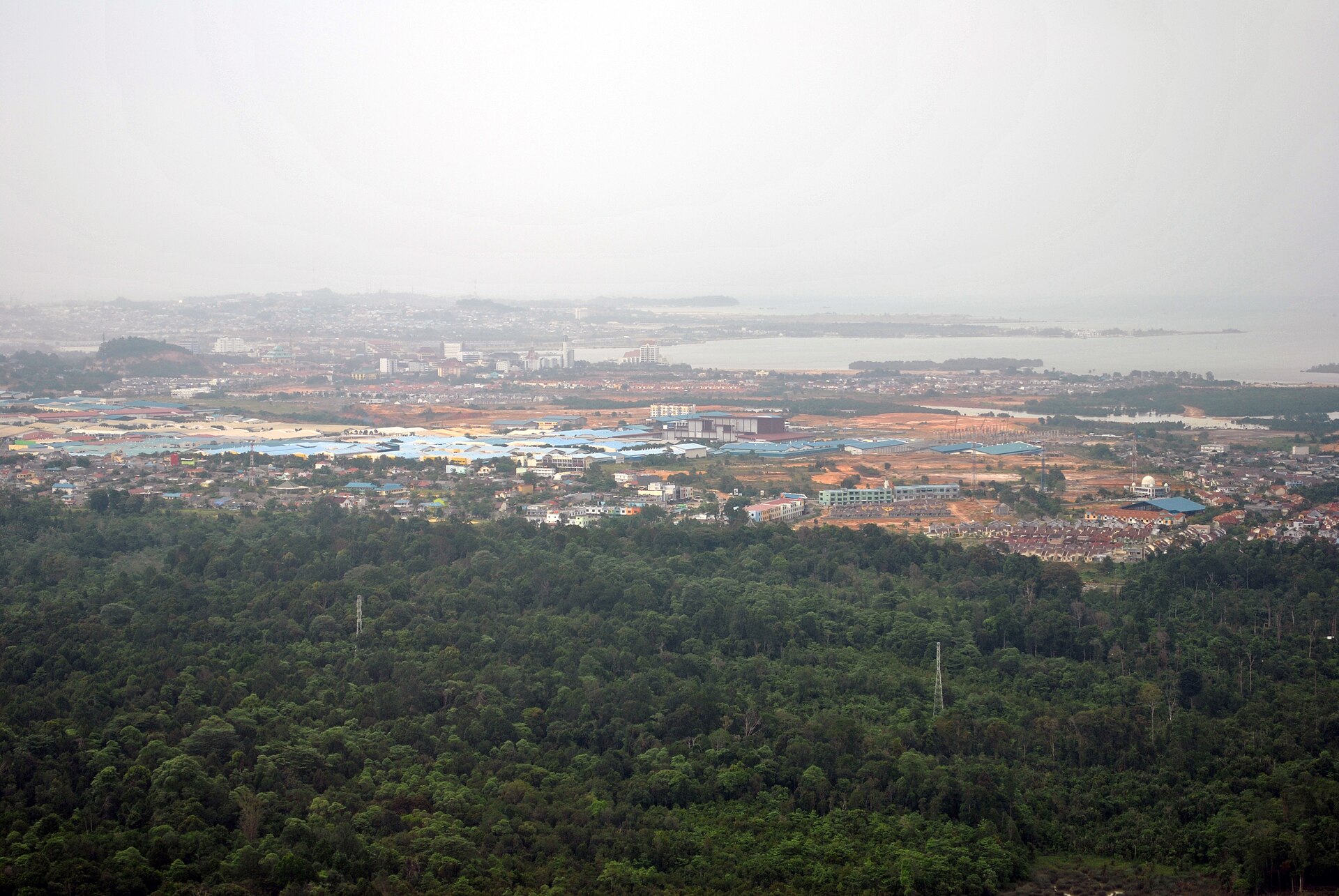
Other speakers at the week pointed the same way. Investortrust.id reported that Energy and Mineral Resources Minister Bahlil Lahadalia said domestic data centre demand could need up to 20 gigawatts of additional power capacity over the coming decades, and that foreign investment in servers should create local value, with power equipment, civil works and labour sourced in Indonesia. The same report named Batam, Karimun and Bintan in the Riau Islands as candidate hubs for computing clusters. It also reported that Vice Minister Angga Raka Prabowo put telecom regulatory costs at an estimated 13 to 14% of operators' gross operating revenue, with reviews under way, and that GoTo unveiled an open-source AI model with 27 billion parameters supporting Indonesian and regional languages.
What is still unclear
The announcements are a statement of intent. They contain no budget, no investment figures for the pilots and no list of regulations to be revised. They do not say whether sovereignty will translate into new requirements on where data is stored or processed, or into incentives for using local capacity. The infrastructure map has not been published. Counting 30 days from 22 October, it would be due around 21 November, though the ministry has not given a date. Readers should treat any claim about specific new obligations with caution until a draft regulation appears.
What companies can prepare
This section is our analysis. A review of rules framed around control of data centres and computing capacity is a reason to know your own position before anything changes.
- Map where your data, applications and AI workloads actually run: which provider, which country and which region, including the AI services staff use day to day.
- Check how easily critical workloads could move between providers or into Indonesian locations, and what that would cost, so a future rule or incentive is a planning decision rather than an emergency.
- If you operate outside Java or in maritime areas, follow the satellite part of the review, since it may change connectivity options for branches and field operations.
- If your organisation could take part in a pilot, prepare one well-defined use case with an owner, a target and a timetable, since the ministry says each pilot will have those.
What to watch next
Watch for publication of the national infrastructure map in the second half of November, and whether it covers data centres and computing capacity as well as networks. Watch which regulations the ministry names in its review, and whether any draft deals with where data and AI workloads must sit. And watch the power and location plans for data centres in the Riau Islands, since they will shape how much local computing capacity companies can actually buy.
Sources
- Bali Tech Week 2026 Hasilkan Empat Agenda Aksi untuk Kedaulatan Digital Indonesia · Kementerian Komunikasi dan Digital(opens in a new tab)
- Siaran Pers: Bali Tech Week 2026 Resmi Dibuka, Meutya Hafid Tegaskan Transformasi Digital yang Terhubung, Tumbuh, dan Terjaga · InfoPublik(opens in a new tab)
- 4 Agenda Lanjutan Usai BTW 2026: Peta Infrastruktur Digital hingga Revisi Aturan · Bisnis.com(opens in a new tab)
- Kedaulatan Digital Indonesia Dipertaruhkan, Kemkomdigi Siapkan 4 Agenda · IDN Times Bali(opens in a new tab)
- Bali Tech Week 2026 Tetapkan 4 Agenda, Indonesia Perkuat Kedaulatan Digital · Investortrust.id(opens in a new tab)
- Unifying Power and Silicon: Inside the Strategy to Anchor Indonesia's High-Stakes AI Blueprint · Investortrust.id(opens in a new tab)
This briefing was prepared by the Indotek editorial desk with AI assistance, from the public sources listed above. It is general information, not legal or professional advice.
Cloud & Data
How Indotek can help
The ministry is putting data centres, computing capacity and the rules around them under review. Knowing where your data and workloads run, and being able to move them, is the kind of work Indotek does.
- Cloud architecture: we design landing zones, network and identity so that where each workload runs, and who can reach it, is explicit and secure by default.
- Cloud migration: we assess each application and choose its path, from re-host to re-architect, so workloads can move to Indonesian locations or other providers when your plans change.
- AI-ready infrastructure: we build the pipelines, vector stores and model-serving foundations that let AI workloads run in production on the infrastructure you choose.
- Cost as an architectural property: we design for unit economics from the start, so decisions about local computing capacity rest on numbers rather than a surprising bill later.